Workout Routine For Core Strength: 10 Best Exercises
Discovering the secret to a healthy, pain-free body starts from the center of your being. Think of your body like a tall building. If the foundation is weak, the whole building shakes. In the human body, that foundation is your core.
Many people think the core is just about getting six-pack abs. However, it is actually a complex system of muscles that wraps around your entire midsection. Having a solid workout routine for core strength changes how you move, sit, and feel every single day.
Let us dive into the ultimate guide to building a rock-solid middle that keeps you moving with power and confidence.
Why Is Core Strength Important?
Your core includes your abs, lower back, hips, and obliques. These muscles work together like a tight corset to protect your spine. When you have a strong middle, every daily activity becomes much easier.
A weak midsection often leads to poor posture and nagging backaches. When you strengthen these muscles, you create a natural shield against injuries. It stabilizes your spine, improves your balance, and helps you lift heavy things without hurting yourself. Whether you are carrying heavy grocery bags or running a marathon, your core is the powerhouse behind every single movement.
What Is the Best Daily Core Workout?
The ideal daily habit does not require hours of sweating. The best daily core workout focuses on consistency, breathing, and proper form rather than high repetitions.
A great daily routine mixes different types of movements. You want exercises where your body holds still against gravity, and movements where your body rotates safely. Spending just 5 to 10 minutes every morning on basic holds can wake up your muscles and protect your back for the rest of the day.
Top 10 Workout Routine For Core Strength
Ready to build a strong midsection? Here is a curated list of the top ten movements. They target every angle of your midsection to give you complete stability and power.
1. The Standard Forearm Plank
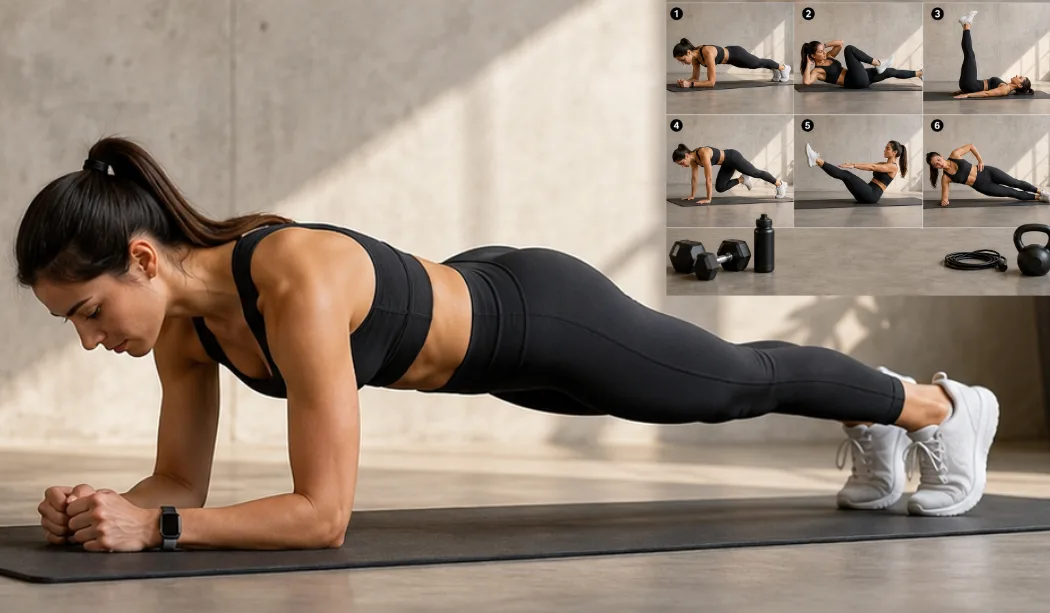
Planks are the ultimate test of total-body stability. Lie on your stomach, then lift your body onto your toes and forearms. Keep your body in a straight line from your head to your heels. Squeeze your glutes and pull your belly button toward your spine.
2. Bird-Dog Extension
Start on your hands and knees. Slowly reach your right arm straight forward while kicking your left leg straight back. Hold for two seconds, return to the center, and switch sides. This build-up protects your lower back.
3. Deadbug Hold
Lie on your back with your arms pointing to the ceiling and knees bent at 90 degrees. Slowly lower your right arm behind your head while straightening your left leg toward the floor. Keep your lower back glued to the ground the entire time.
4. Glute Bridges
Lie on your back with bent knees and feet flat on the floor. Lift your hips toward the ceiling by squeezing your glutes. This movement strengthens the back of your core loop.
5. Russian Twists
Sit on the floor, lean back slightly, and lift your feet off the ground. Twist your torso from side to side, touching the floor next to you. This targets your side muscles, known as obliques.
6. Side Planks
Prop yourself up on one forearm and the side of your foot. Lift your hips high to create a straight line. This creates amazing side-to-side stability.
7. Bicycle Crunches
Lie flat and bring your right elbow to your left knee while extending your right leg straight out. Alternate sides in a smooth, cycling motion.
8. Superman Holds
Lie on your belly and lift your arms, chest, and legs off the floor at the same time. Hold this position to build an incredibly strong lower back.
9. Mountain Climbers
Start in a high plank position. Drive your knees toward your chest one at a time as fast as you can while keeping your hips steady.
10. Hanging Knee Raises
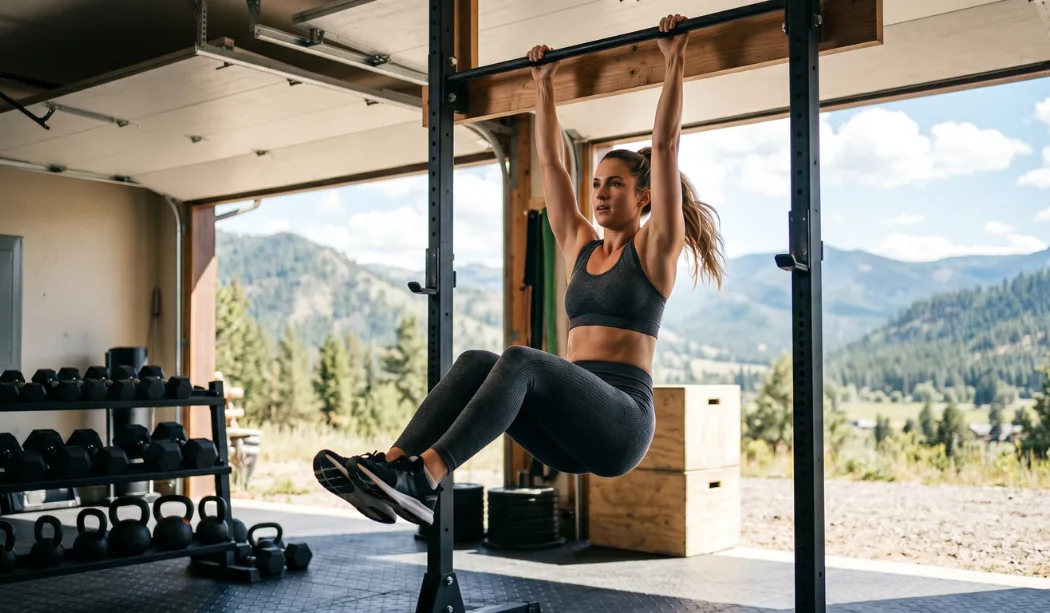
Hang from a pull-up bar and slowly lift your knees toward your chest using your lower stomach muscles. Lower them down with control without swinging.
Best Workout Routine for Core Strength Beginners
If you are new to fitness, do not worry. You do not need complex moves to get results. The best workout routine for core strength beginners starts with mastering simple positions before adding difficult variations.
Focus heavily on the deadbug and the bird-dog. These two movements are amazing because they put zero stress on your neck and lower back. Start by doing 3 sets of 8 repetitions for each move, taking a short break between sets. Listen to your body and focus on moving slowly rather than rushing through the steps.
How to Build Core Strength Fast?
Everyone wants quick results, but the secret to speed is high-quality movement. To figure out how to build core strength fast, you must learn to engage your muscles correctly.
Never hold your breath during these exercises. Instead, breathe deeply into your stomach. This deep breathing activates your deepest abdominal layer, the transversus abdominis. Contracting this muscle during your workouts accelerates your progress and creates deep structural strength much quicker than thousands of fast crunches ever could.
Workout Routine for Core Strength at Home
You do not need an expensive gym membership to build a resilient midsection. A workout routine for core strength at home requires nothing more than a soft yoga mat and a small open space in your living room.
Easy 10-Minute Home Circuit
- Bird-Dog: 60 seconds (alternate sides)
- Forearm Plank: 45 seconds hold
- Glute Bridges: 60 seconds
- Rest: 60 seconds
- Repeat the entire loop two times.
Using your own body weight provides plenty of resistance to build functional everyday fitness.
Core Exercises Gym Machines and Equipment
If you love going to the fitness center, you can use specialized tools to add resistance. The right core exercises gym routine uses cables, hanging bars, and stability balls to challenge your balance.
Try using the cable machine for woodchoppers. This exercise mimics real-life movements like swinging a bat or chopping wood. The constant resistance from the cable forces your midsection to work hard through the entire rotation, building incredible power.
Short and Effective 15 Minute Core Strength Workout Routine
When life gets busy, a quick session can still deliver massive health benefits. A 15 minute core strength workout routine should keep your heart rate up with minimal rest.
Set a timer on your phone for 45 seconds of work followed by 15 seconds of rest. Move continuously through planks, deadbugs, bicycle crunches, and supermans. Complete three full rounds of this circuit for a fast, burning workout that fits perfectly into a lunch break.
Full Body Workout Routine With Core Training Integration
The best fitness plans do not separate your midsection from the rest of your body. A full body workout routine with core training uses large movements that force your middle to stabilize your weight.
When you do squats, lunges, or overhead presses, your stomach muscles work overtime to keep you upright. Adding these compound lifts to your weekly schedule ensures your center stays active during every single movement you make.
Advanced Core Strengthening Workout for Athletes
If regular planks feel too easy, it is time to progress to an advanced core strengthening workout. Experienced movers need dynamic challenges to push their performance.
Try adding RKC planks to your routine. In an RKC plank, you actively pull your elbows toward your toes and squeeze every muscle in your body as hard as possible. This turns a simple hold into an intense 15-second total-body challenge. You can also introduce medicine ball slams to build explosive athletic power.
Specialized Ab and Core Strengthening Exercises
To get a complete look and feel, you need a balance of ab and core strengthening exercises. This means working the front vanity muscles along with the deep stabilizing muscles. Combine standard crunches with deep breathing vacuums. While crunches shape the outer layers, stomach vacuums train the internal muscles that pull your waistline inward and support your internal organs.
Low Impact Core Strengthening Exercises for Back Comfort
If you struggle with joint pain, traditional crunches can cause uncomfortable strain. Thankfully, low impact core strengthening exercises protect your spine while still building serious muscle.
The pelvic tilt is an exceptional movement for active recovery. Lie on your back and simply press your lower spine firmly into the floor by tightening your stomach. This tiny movement relieves lower back pressure and teaches your body how to align its pelvis correctly.
Sports Specific Core Training Routine for Peak Performance
Athletes need a midsection that handles sudden changes of direction. A sports specific core training routine focuses heavily on anti-rotation movements.
The Pallof press is a favorite among professional trainers. Hold a resistance band at your chest while standing sideways, then press the band straight out in front of you. The band will try to twist your body, and your midsection must fight hard to stay completely still. This prepares your body for the physical demands of soccer, basketball, tennis, and running.
Kickstart Your Fitness with a 30 Day Core Strength Challenge
Sometimes you just need a clear plan to build a healthy habit. Starting a 30 day core strength challenge is a fun way to stay motivated and see visible progress.
Write down a simple calendar track. Start with a 20-second plank on day one, and gradually increase the time by 5 seconds every day. By the end of the month, you will be holding a beautiful, strong plank for over two minutes straight.
Best Exercises to Improve Core Stability and Balance
True fitness means staying steady on your feet. The best exercises to improve core stability challenge your balance by changing your base of support.
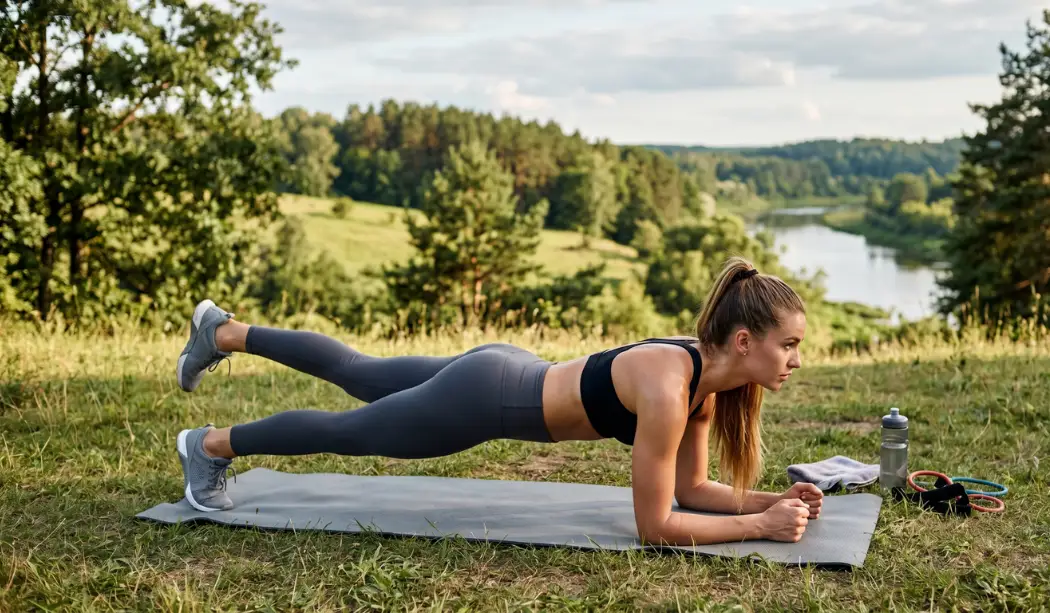
Try doing single-leg balances while moving your arms in circles, or practice planks with one foot lifted off the ground. These small variations force the deep stabilizing tissues in your hips and trunk to fire instantly, protecting you from slips and falls in the real world.
Expert Insights on Trunk Stability
"Trunk stability is not about how many crunches you can do in a minute. It is about your ability to stop unwanted movement in your spine when external forces are pushing against you."
— Dr. Michael Thomas, Physical Therapy Researcher
Fitness professionals agree that moving with absolute control beats fast, sloppy movements every single time.
Frequently Asked Questions
Can I do core workouts every single day?
Yes, you can practice gentle stabilizing moves like bird-dogs every day. However, if you are lifting heavy weights or doing intense advanced workouts, give your muscles 48 hours to rest and rebuild.
How long does it take to see results?
If you practice your moves three times a week with proper form, you will begin to notice improved posture and less back pain within 3 to 4 weeks.
Do core exercises burn belly fat?
Core exercises strengthen the underlying muscles, but they do not burn fat from that specific spot. To lose belly fat, combine your midsection training with a healthy diet and regular cardiovascular activity like walking or swimming.