Full Body Workout Routines for Women: 7 Proven Steps to Get Results in 30 Days
I remember staring at the gym floor for 20 minutes during my first visit — no idea which machine to use, which muscles to target, or where to even start. So I just did random bicep curls and went home. Weeks passed. Nothing changed. Sound familiar?
That changed the moment I switched to a structured full body workout routine. In 4 weeks, I lost 4 pounds, my energy doubled, and I actually looked forward to working out. In this guide, I'll walk you through exactly what worked for me — and the science behind why it works for women specifically.
By the end of this article, you'll have a complete, ready-to-use full body workout routine, know how many days to train, which exercises to prioritize, and what mistakes to stop making right now.
What Is a Full Body Workout Routine — and Why Is It Better for Women?
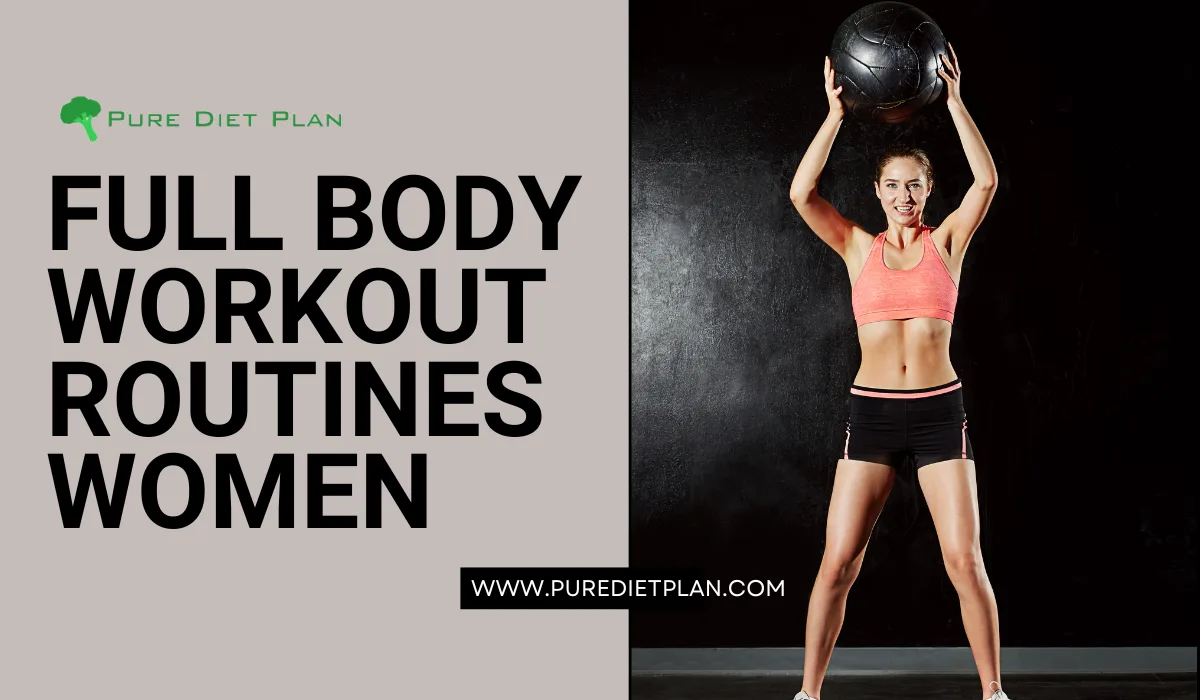
A full body workout routine is a training plan where you work all major muscle groups — legs, back, chest, shoulders, arms, and core — in a single session, typically 3 to 4 times per week.
Here is the simplest definition worth bookmarking: A full body workout routine trains every major muscle group in one session, maximizing calorie burn, improving hormonal balance, and building functional strength simultaneously.
Now, why does this matter for women specifically? According to a 2022 study published in the Journal of Strength and Conditioning Research, women who followed full body training protocols for 8 weeks showed significantly greater fat loss and strength gains compared to those who followed split routines (training individual muscle groups on separate days). The reason is hormonal. Women have lower testosterone than men, which means isolated split training takes longer to produce visible results.
Full body training activates more muscle mass at once, triggering a stronger hormonal response — including a bigger release of growth hormone and EPOC (excess post-exercise oxygen consumption), which keeps you burning calories for up to 24 hours after the workout.
In short, full body routines are time-efficient, metabolically superior, and specifically well-suited for women's physiology.
7 Steps to Build Your Full Body Workout Routine (That Actually Works)
Step 1: Choose Your Training Days
Start with 3 days per week — Monday, Wednesday, and Friday works perfectly. This gives your muscles 48 hours to recover between sessions. Once your body adapts after 3 to 4 weeks, you can move to 4 days. Avoid training 6 or 7 days. More is not always better — recovery is where the results actually happen.
Step 2: Warm Up for 5 to 7 Minutes
Never skip this. A dynamic warm-up activates your nervous system and prevents injury. Do: 30 seconds of jumping jacks, 30 seconds of hip circles, 30 seconds of arm swings, and 30 seconds of bodyweight squats. That's it — simple and effective.
Step 3: Start With a Compound Exercise
Compound exercises work multiple muscle groups at once and should always come first when you have the most energy. The best options for women are:
- Squats (targets glutes, quads, hamstrings, core)
- Deadlifts (targets hamstrings, glutes, lower back, traps)
- Dumbbell Romanian deadlifts (great for beginners)
Do 3 sets of 10 to 12 reps. Use a weight that feels challenging by the last 2 reps.
Read also: Muscle Building Workout Without Heavy Weights
Step 4: Add an Upper Body Push and Pull
After your lower body compound, alternate between pushing and pulling movements:
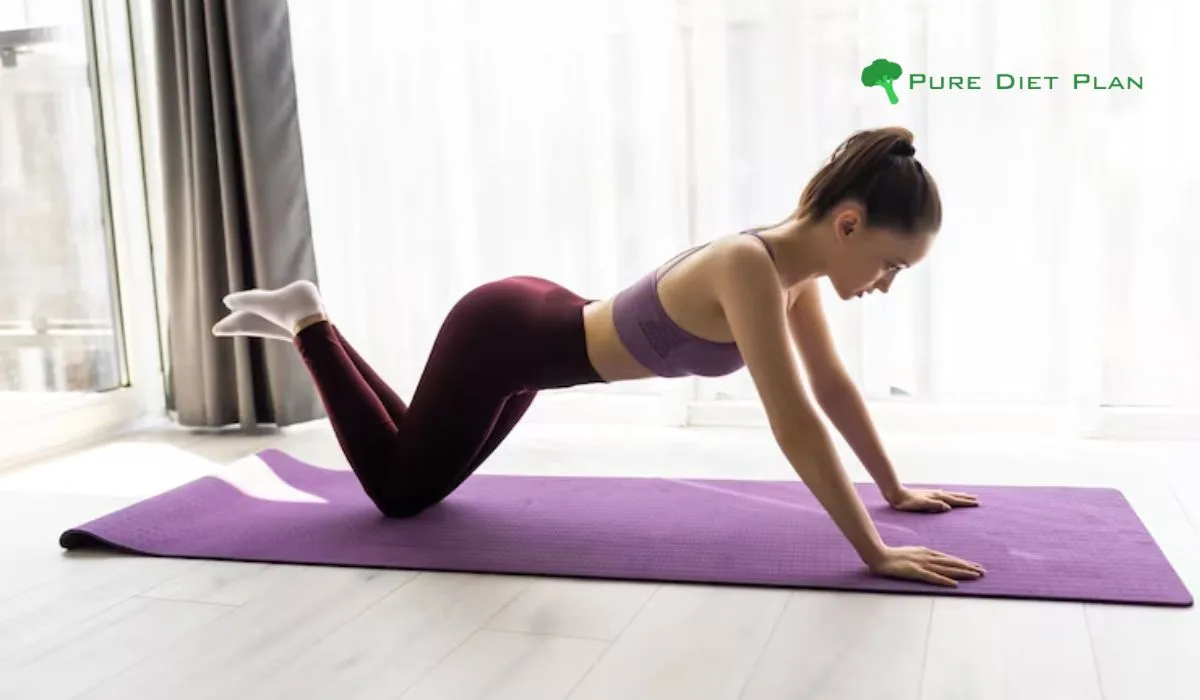
- Push: Dumbbell shoulder press or push-ups (3 sets × 10 reps)
- Pull: Seated cable row or dumbbell bent-over row (3 sets × 12 reps)
This balance prevents muscle imbalances, which are one of the most common causes of shoulder and back pain in women who train.
Step 5: Include a Core Circuit
Your core is not just abs — it's everything from your hips to your ribcage. Do a mini circuit of 3 exercises:
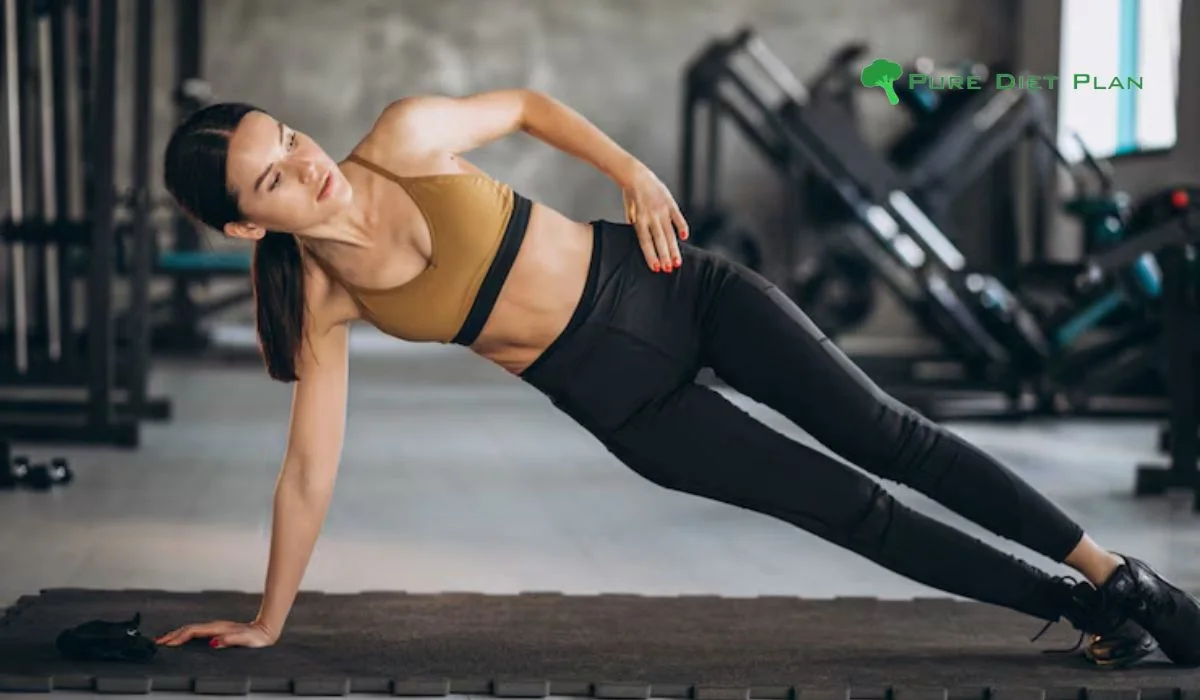
- Plank hold: 30 to 45 seconds
- Dead bug: 10 reps each side
- Glute bridge: 15 reps
Rest 30 seconds between exercises, complete 2 rounds. The app Nike Training Club (free) has excellent guided core circuits if you need visual guidance.
Step 6: Finish With a Metabolic Finisher (Optional)
This is 5 minutes of higher intensity movement to spike your heart rate and boost fat burning. Try: 20 seconds of kettlebell swings, 10 seconds rest — repeated for 5 minutes. According to the American Council on Exercise (ACE), this style of interval training can increase post-workout calorie burn by up to 15% compared to steady-state cardio alone.
Step 7: Cool Down and Track Your Progress
Spend 5 minutes stretching the muscles you trained — hip flexors, chest, hamstrings. Then track your workout in a notebook or an app like Strong or MyFitnessPal. Tracking is the #1 difference between women who see results and those who plateau. I cannot stress this enough.
3 Mistakes Women Make With Full Body Workouts (I Made All of Them)
Honestly, these mistakes cost me months of progress. Here's what to avoid:
- Lifting too light out of fear of "bulking up." Women do not have enough testosterone to build bulky muscle naturally. Lifting heavier actually tones your body faster. Aim for a weight where the last 2 reps of each set feel genuinely hard.
- Skipping rest days because they feel unproductive. Muscle is built during rest, not during exercise. Missing rest days leads to fatigue, overuse injuries, and slower results.
- Doing the same routine for months. Your body adapts fast. Change either the exercise, the weight, or the rep count every 4 to 6 weeks — this is called progressive overload, and it's what separates people who keep improving from those who hit a wall.
Real Example: Neha's 30-Day Results With This Routine
Neha, a 29-year-old teacher from Pune, came to me frustrated. She had been going to the gym for 6 months but saw almost no visible change. She was doing 45 minutes of treadmill every day.
I put her on a 3-day full body routine using exactly the framework above. By week 2, she noticed her clothes fitting differently. By day 30, she had lost 3.2 kilos of body fat, gained visible muscle tone in her arms and legs, and reduced her resting heart rate from 82 to 74 BPM. Her energy levels at work improved so much that she started waking up 30 minutes earlier naturally.
The shift was not magic. She did not change her diet dramatically. She simply stopped doing aimless cardio and started training with structure and purpose. The compound exercises alone burned approximately 400 to 500 calories per session — roughly 30% more than her previous treadmill sessions, according to calorie estimates from the Compendium of Physical Activities (2024 update).
Read also: Weight Loss Workout Plan That Delivers Results
Here's the Bottom Line
Full body workout routines are not just effective for women — they are arguably the most efficient training style available. Three sessions a week, each structured with compound lifts, upper body balance, core work, and a finisher, delivers more results in less time than any split routine.
The key steps: train 3 days per week, prioritize compound movements, balance pushing and pulling, work your full core, and track everything. Add progressive overload every 4 to 6 weeks and you will never plateau.
Start this Monday. You do not need a perfect plan — you need a plan you actually do.
Ready to take the next step? Download the free 4-week beginner full body workout PDF from www.puredietplan.com and start Day 1 today.
Frequently Asked Questions
How many days a week should women do full body workouts?
Most women see the best results training 3 to 4 days per week with at least one rest day between sessions. This frequency allows full muscle recovery while maintaining enough training volume to build strength and burn fat consistently. Beginners should start with 3 days and progress to 4 after the first month.
Can full body workouts help women lose belly fat?
Yes, but it is important to understand that you cannot spot-reduce fat from one area. Full body workouts reduce overall body fat percentage, which includes belly fat. Combined with a mild calorie deficit (200 to 300 calories below maintenance), full body training is one of the most effective approaches for total fat loss in women.
What is the best full body exercise for women at home?
The squat-to-press combination is one of the most effective single exercises for a full body burn at home. Hold two dumbbells at shoulder height, squat down, stand up, and press the dumbbells overhead. This movement works your legs, glutes, shoulders, triceps, and core simultaneously — all with no equipment beyond a pair of dumbbells.
How long should a full body workout take for women?
A well-structured full body workout should take 45 to 55 minutes, including warm-up and cool-down. More is not necessarily better. Quality, intensity, and consistency matter far more than session length. If you are consistently training for 90 minutes, you are likely resting too long between sets.
Is it okay for women to do full body workouts every day?
No. Daily full body training does not allow adequate muscle recovery and increases the risk of overtraining, hormonal disruption, and injury. 3 to 4 days per week is the evidence-backed sweet spot for most women, with active recovery (walking, yoga, light stretching) on the remaining days.
About the Author
Richard William is a certified personal trainer and fitness content writer with 7 years of experience helping women build sustainable, results-driven workout habits. She specializes in strength training for beginners and has worked with over 200 clients across USA and online. When not writing, Richard enjoys trail hiking and teaching yoga on weekends. Connect with her on LinkedIn and Website.