Pilates Workout Routine For Core Strength: 10 Easy Moves At Home
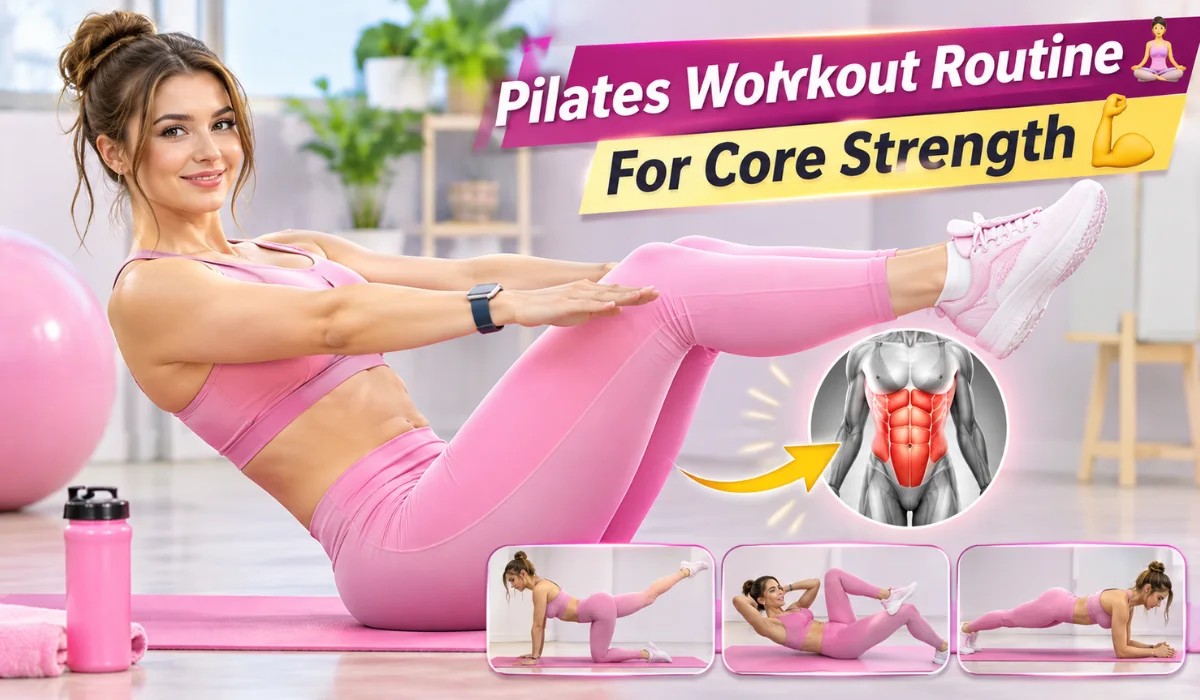
Building a strong middle changes everything about how the body moves and feels every single day. A reliable Pilates Workout Routine For Core Strength builds deep stability without hurting the joints or demanding expensive gym gear. Most people think core training means doing hundreds of painful sit-ups on a hard floor. In reality, true core power comes from controlled breathing, slow movement, and waking up the hidden muscles around the spine. Whether you live in a busy apartment in New York or a quiet home in Mumbai, a mat is all you need. This guide breaks down the exact moves, expert tips, and simple schedules to transform your midsection safely.
What Is The Best Pilates Workout Routine For Core Strength?
The best Pilates workout routine for core strength mixes slow, controlled movements with deep, focused breathing. Instead of rushing through hundreds of fast crunches, Pilates asks the body to move with precision and grace. A well-rounded routine targets the entire powerhouse. In Pilates, the "powerhouse" includes the abdominal muscles, lower back, hips, and glutes. Working all these areas together creates total-body stability and prevents common injuries.
"True core strength is not about how many crunches a person can do in a minute. It is about how well the deep abdominal muscles support the spine during every single movement of the day." — Sarah Jenkins, Certified Comprehensive Pilates Instructor
To get the best results, a routine should include exercises for core control and body alignment Pilates, moves for Pilates exercises for deep core activation, and stretches that keep the spine flexible. Consistency beats intensity every single time.
Why Is Pilates Effective For Building Core Strength?
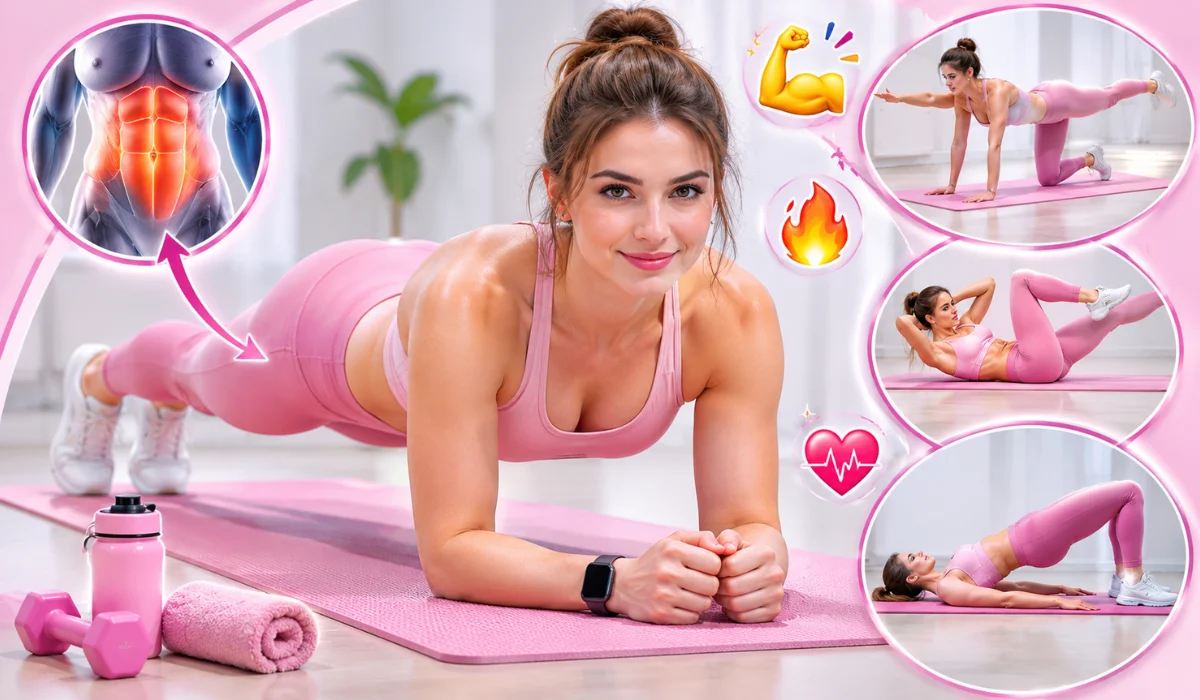
Most traditional ab workouts only train the top layer of stomach muscles, called the rectus abdominis. While this helps with appearance, it leaves the deeper stabilizing muscles weak and sleepy. Why is Pilates effective for building core strength? Because every single move starts from the center of the body. Before lifting a leg or curling the head, the exerciser pulls the belly button gently toward the spine. This constant focus wakes up the transverse abdominis, which is the deepest abdominal muscle. Strengthening this muscle flattens the tummy, protects the lower back, and improves posture almost instantly.
Read Also: Calf Muscle Workout For Stronger Legs: Easy Home Routine
How Can Pilates Workouts Improve Core Strength?
Understanding how can Pilates workouts improve core strength comes down to three magic ingredients: breath, alignment, and time under tension.
- Deep Lateral Breathing: Breathing wide into the ribcage engages the diaphragm and pelvic floor, creating internal pressure that stabilizes the spine.
- Neutral Spine Alignment: Keeping the pelvis level ensures the right muscles do the heavy lifting instead of letting the hip flexors or neck take over.
- Slow Control: Moving slowly eliminates momentum, forcing the muscles to work harder through the entire range of motion.
Top 10 Pilates Workout Routine For Core Strength
This Top 10 Pilates Workout Routine For Core Strength follows a smart flow from gentle warm-ups to deep endurance challenges. Perform this Pilates workout routine for core strength at home three to four times a week for steady results.
1. Pelvic Curl (The Warm-Up)
Lie flat on your back with knees bent and feet flat on the mat, hip-width apart. Exhale, press your lower back into the floor, and slowly peel your spine up one bone at a time until your hips lift. Inhale at the top, then exhale as you melt your spine back down slowly. Repeat 8 to 10 times to wake up the spine and glutes.
2. Supine Toe Taps for Pilates Exercises for Deep Core Activation
Stay on your back and lift both legs into a "tabletop" position with knees bent at 90 degrees. Keep your lower back heavy on the mat without arching. Exhale and slowly tap your right toes toward the floor, then inhale to lift back up. Alternate legs for 12 total taps while keeping your ribs knitted down.
3. The Hundred for a Pilates Routine for Improving Core Endurance
Curl your head, neck, and shoulders off the mat while reaching your arms straight beside your hips. Extend your legs to a 45-degree angle, or keep knees bent for extra back support. Pump your arms up and down briskly while inhaling for 5 counts and exhaling for 5 counts. Complete 10 full breath cycles (100 pumps) to build serious heat and stamina.
4. The Roll-Up for a Pilates Workout for Upper and Lower Abs
Lie flat with legs straight and arms reaching overhead toward the ceiling. Inhale to nod your chin, then exhale to peel your upper body off the mat smoothly without jerking. Reach forward over your toes, then roll back down slowly with control. Do 6 to 8 slow reps to master your Pilates workout for upper and lower abs.
5. Single-Leg Stretch
Lift your head and shoulders off the mat and hug your right knee toward your chest while extending your left leg long. Place your right hand on your ankle and left hand on your knee. Switch legs smoothly on each exhale for 10 to 12 slow pairs. Keep your pelvis completely still so your trunk does not rock side to side.
6. Double-Leg Stretch
Hug both knees into your chest with your head and shoulders lifted off the mat. Inhale as you reach your arms overhead and extend both legs out together at a high diagonal. Exhale as you sweep your arms around and pull your knees back in. Repeat 8 times, making sure your lower back never lifts off the floor.
7. Criss-Cross for a Pilates Routine for Waist and Core Strength
Place your hands behind your head with elbows wide and legs in tabletop. Exhale as you twist your right ribcage toward your left knee while extending your right leg straight. Inhale through the center and exhale to twist to the other side. Complete 10 slow twists per side to sculpt a Pilates routine for waist and core strength.
8. Spine Twist
Sit tall on your sit-bones with legs extended straight out in front of you and arms stretched wide to a "T." Grow your spine as tall as possible. Exhale and pulse twice as you twist your waist to the right, keeping your hips anchored to the mat. Return to center and twist left for 6 reps per side.
9. Forearm Plank with Leg Pull
Flip onto your stomach and prop yourself up on your forearms with elbows directly under your shoulders. Step your feet back into a straight line from head to heels. Lift one leg just two inches off the mat without letting your hips drop or twist. Hold for 2 seconds, switch sides, and repeat 6 times per leg.
10. Swimming (Back Core Finisher)
Lie face down on your mat with arms stretched straight overhead and legs long. Gently pull your belly button away from the floor to protect your lower back. Lift your chest, arms, and legs slightly, then flutter opposite arm and leg quickly like you are swimming. Continue for 20 to 30 seconds while breathing steadily.
Read Also: Best Workout Plan For Active Lifestyle: Boost Energy And Strength
15 Minute Pilates Workout For Core Strength At Home
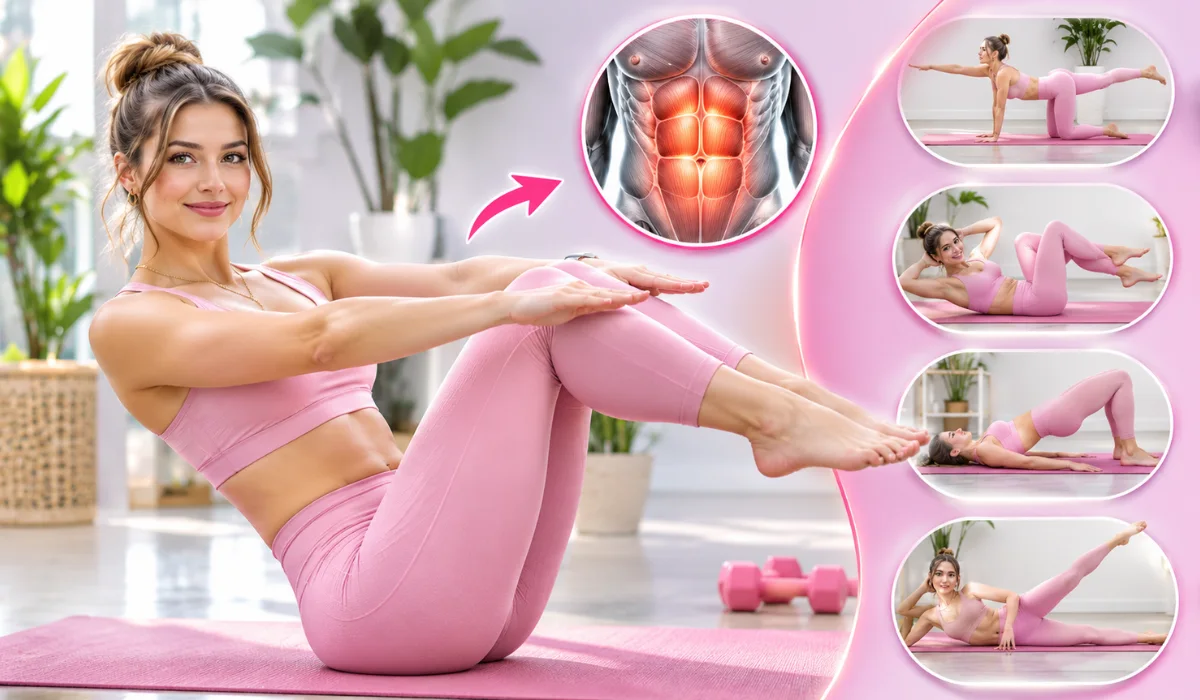
Busy schedules should never stand in the way of feeling strong. This quick 15 minute Pilates workout for core strength delivers maximum results in minimal time. It requires zero equipment, making it the ultimate Pilates workout routine for core strength at home.
| Minute Mark | Exercise Name | Focus Area | Repetitions / Duration |
| 0:00 – 2:00 | Pelvic Tilts & Deep Breathing | Warm-up & Pelvic Floor | 10 slow breaths |
| 2:00 – 4:00 | The Hundred | Core Endurance & Heat | 100 arm pumps |
| 4:00 – 6:30 | Single-Leg & Double-Leg Stretch | Upper & Lower Abs | 8 reps each move |
| 6:30 – 8:30 | Criss-Cross | Obliques & Side Waist | 8 slow reps per side |
| 8:30 – 10:30 | Dead Bug | Deep Transverse Abdominis | 10 reps per side |
| 10:30 – 12:30 | Shoulder Bridge | Glutes & Spine Articulation | 8 slow bridges |
| 12:30 – 14:00 | Swimming | Lower Back & Posture | 30 seconds flutter, rest, repeat |
| 14:00 – 15:00 | Child's Pose & Cat-Cow | Cool-down & Spine Stretch | 5 deep breaths |
To get the most out of a Pilates workout routine for core strength at home, clear a small space on the floor, roll out a yoga mat or thick towel, and put the phone on silent. Fifteen minutes of pure focus beats an hour of distracted exercise.
"Consistency in a 15-minute home practice creates massive changes in spinal health. Doing a little bit four times a week teaches the nervous system how to hold good posture effortlessly." — Marcus Vance, Movement Specialist and Physical Therapist
Low Impact Pilates Workout For Core Strength: Safe Tips For Beginners
One of the biggest reasons people fall in love with Pilates is how gentle it feels on the joints. A low impact Pilates workout for core strength involves zero jumping, pounding, or heavy jarring movements. This makes it safe for beginners, older adults, and people bouncing back from minor injuries. Even though the moves are gentle, they are still very challenging. Following a few simple safety rules keeps the body happy and ensures the right muscles do the work.
Protect The Neck During Ab Curls
Many beginners feel tension in their neck during exercises like The Hundred or Criss-Cross. This happens when the head leads the movement instead of the ribs. Always imagine holding a soft peach between the chin and the chest. Lift from the breastbone, keep the gaze looking toward the thighs, and rest the head down on the mat whenever the neck gets tired. The abs still work hard even with the head resting flat!
Keep The Lower Back Happy
If the lower back starts to ache or arch off the mat when lowering the legs, the legs are going too low. Lift the legs higher toward the ceiling until the lower back feels supported and comfortable. Strength builds over time, so never force the range of motion.
Read Also: Top 10 Workout Routine For Lean Muscle: Build Your Best Physique
Pilates Workout Routine For Core Strength: Common Mistakes To Avoid
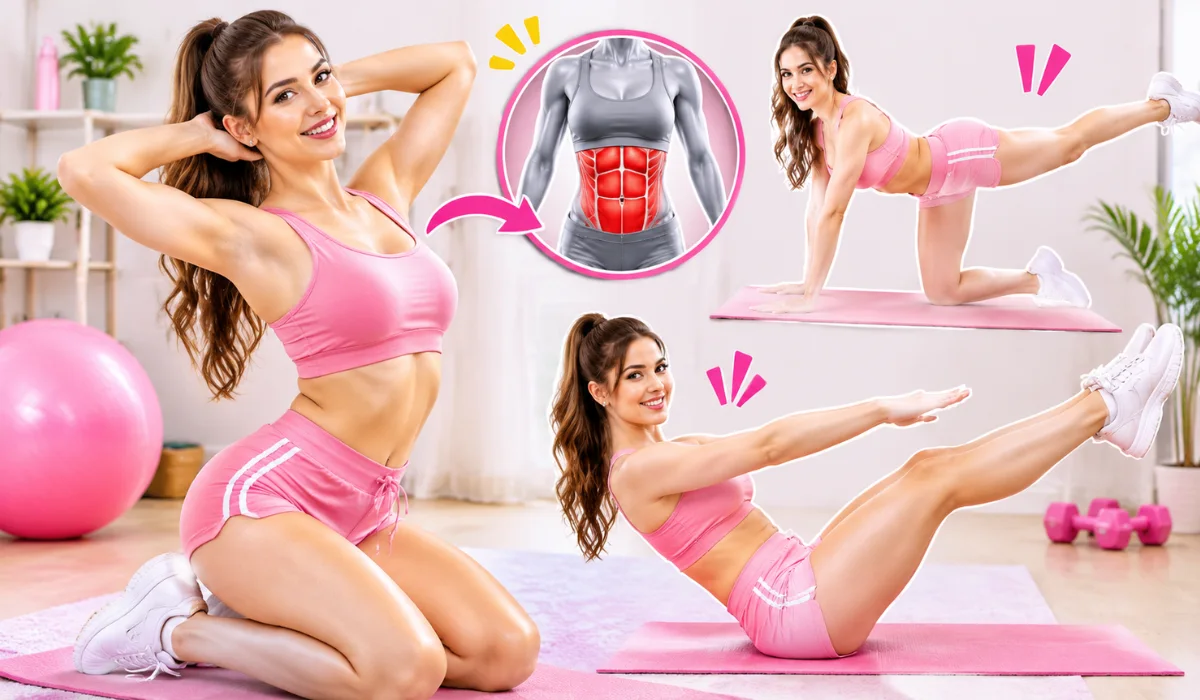
Working smarter always beats working harder. Avoiding these common errors ensures every minute spent on the mat builds real, lasting strength.
- Holding the Breath: Holding the breath creates tension in the neck and shoulders. Always exhale during the hardest part of the movement to help engage the deep abs.
- Rushing Through Reps: Speed uses momentum, which cheats the muscles out of work. Count to three on the way up and three on the way down.
- Pushing the Belly Out: Watch the stomach during ab curls. If the belly domes or pushes outward like a loaf of bread, reset the breath and draw the navel gently downward.
- Forgetting the Back Muscles: A strong core wraps all the way around the body. Never skip back-strengthening moves like Swimming or Shoulder Bridges.
Frequently Asked Questions
How often should someone do a Pilates workout routine for core strength?
Doing Pilates three to four times a week is the sweet spot for noticeable results. Because it is a low impact Pilates workout for core strength, the muscles recover quickly without needing long rest periods between sessions.
Can Pilates really flatten the stomach?
Yes, Pilates strengthens the transverse abdominis, which acts like an internal girdle that pulls the abdominal wall inward. Combined with healthy eating habits and regular movement, a consistent Pilates workout routine for core strength creates a flatter, firmer midsection.
Is 15 minutes of Pilates enough to see results?
Absolutely! A focused 15 minute Pilates workout for core strength targets deep stabilizer muscles intensely. Performing short, high-focus routines consistently improves posture, balance, and core endurance within just three to four weeks.
Do beginners need equipment for a Pilates workout routine for core strength at home?
No equipment is needed to start. Bodyweight mat exercises provide plenty of resistance to challenge both beginners and advanced athletes. A simple exercise mat or folded towel is enough to cushion the spine on hard floors.
What is the difference between regular ab workouts and Pilates?
Regular ab workouts often rely on fast momentum and focus mostly on surface muscles. Pilates emphasizes slow control, spinal alignment, and deep breathing to strengthen the entire core cylinder, including the pelvic floor, deep abs, and lower back. Rolling out a mat today is the easiest step toward a stronger, pain-free body. Start slow, focus on every breath, and enjoy watching your core strength grow stronger with every single session.

Best Yoga Exercises For Overall Fitness: Your Complete Guide to Health

Anti-Inflammatory Foods to Reduce Body Fat
Best Vegan Meals For Sustainable Weight Loss

Post-Workout Meals to Speed Up Muscle Recovery

Low-Calorie Lunch Ideas That Dont Leave You Hungry

High-Fiber Foods to Improve Digestion Naturally